
Individually designed circuits
Cable and protection are sized for the actual load, not a generic assumption, so new circuits perform reliably from day one.
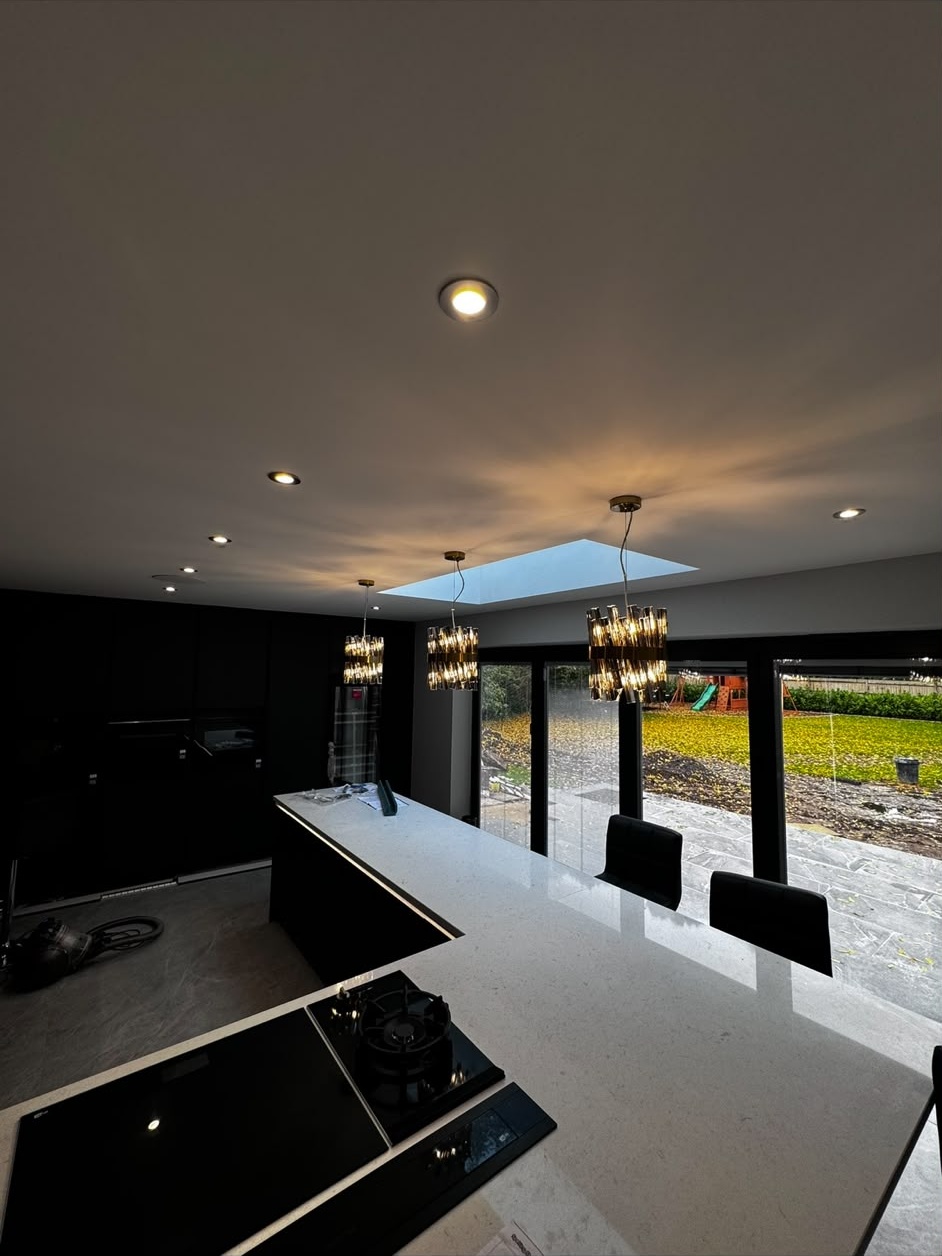
New Circuits & Installations
Extending, converting a loft or fitting out a new build brings a run of decisions about circuits, positions and supply capacity. Every stage from first fix cabling to final testing is carried out to BS 7671 and quoted individually before work starts.
Every new installation is quoted individually after seeing the drawings or the site. NAPIT Approved Domestic Installer, Reg. 79130, quotes are free.
13 years
On the tools as an electrician
NAPIT 79130
Approved Domestic Installer
£2m
Public liability insurance
£250,000
Professional indemnity cover
The service
New installation work covers anything being wired from scratch rather than repaired or replaced: new circuits for an extension, additional sockets and lighting in a converted loft or garage, a new supply to an outbuilding, or the complete first fix and second fix of a new build room. It follows the same BS 7671 requirements as a rewire but is usually confined to a specific area rather than the whole property.
Work is carried out in two distinct stages. First fix happens before plastering and flooring: cable is run through joists and studwork, back boxes are set, and containment for lighting and sockets is put in place. Second fix follows once decoration is done: accessories, light fittings and any new consumer unit circuits are connected, then tested.
Because every project differs in scope, drawings, number of points and existing supply capacity, new installation work is quoted individually rather than against a price list. A conversation about the drawings or a site visit is enough to give an accurate written quote before anything is booked in.
Existing circuits are checked where new work connects into them, since adding load to an already-stretched consumer unit or an old ring circuit is a common way new work goes wrong if it is not properly assessed first.
Kitchen extensions, loft conversions and garage conversions all need new circuits designed around the finished layout, not squeezed into whatever spare capacity happens to exist.
A full first fix and second fix installation for a gutted property or new build room, planned alongside plastering, flooring and kitchen fitting.
A new circuit for a hot tub, workshop, shed or garden office, sized and protected correctly and connected back to a consumer unit that has the capacity to take it.
What happens if it waits
New installation work looks straightforward on the surface, but most of the problems that surface later come from decisions made before a single cable was run.
Adding new circuits to a board that is already at capacity, or that lacks spare ways, either overloads the supply or means the board should have been replaced first.
A cable sized for lighting cannot safely carry a shower or an electric hob. Getting this wrong at first fix stage means opening up finished walls to correct it later.
Positions agreed on-site before plastering are far easier and cheaper to adjust than positions discovered to be wrong once a kitchen or bathroom is fitted.
New circuits and consumer unit changes are notifiable under Building Regulations. Work that is not certified and registered can cause problems at the point of sale.
Cable routes clashing with plumbing, insulation or joists installed by other trades cause delays and rework if first fix is not properly sequenced and coordinated.
Assuming the incoming supply can take a new large load, such as an EV charger or an outbuilding supply, without checking main fuse rating and cable capacity first.
How it works
Drawings, room layouts or a site visit are used to plan circuit routes, socket and light positions, and any impact on the existing consumer unit, with a written individual quote provided.
Cable is run through joists, studwork and voids, and back boxes and containment are set in place before plastering, boarding or flooring goes down.
First fix is sequenced around plumbing, plastering and building work so cable routes are agreed and clashes are avoided before anything is closed up.
Once decoration is complete, sockets, switches, light fittings and any new consumer unit circuits are connected and finished to the agreed specification.
New circuits are tested to BS 7671, an Electrical Installation Certificate is issued, and notifiable work is registered through NAPIT before handover.
What you get
Cable and protection are sized for the actual load, not a generic assumption, so new circuits perform reliably from day one.
Socket, switch and light positions are confirmed at first fix stage, avoiding costly changes once walls and floors are finished.
Consumer unit capacity and incoming supply are checked before new circuits are added, so new work does not create a hidden overload.
Individual quotes based on drawings or a site visit mean the scope is clear and there are no unexplained extras once work is under way.
First fix is planned around plumbing, plastering and joinery so the job runs to schedule rather than causing delays for everyone else on site.
An Electrical Installation Certificate is issued and notifiable work registered through NAPIT, giving a clear paper trail for building control and future sale.
In detail
New circuits, sockets, lighting and supplies each bring their own planning considerations. What follows is how this plays out on typical extensions, conversions and new builds around Fleet and the surrounding area.
Kitchen extensions typically need new socket circuits, dedicated circuits for ovens and hobs, lighting circuits, and sometimes an outdoor supply for the garden. First fix has to be coordinated closely with the kitchen fitter's plan, since appliance positions dictate where dedicated circuits terminate.
Where an extension adds meaningful load to the property, the existing consumer unit is checked for spare capacity. It is common for a new installation project to include a consumer unit upgrade alongside the new circuits themselves, particularly in older properties where the board was already close to full.
Loft conversions need new lighting and socket circuits run up through the property, often via a new sub-circuit from the consumer unit rather than an extension of an existing one, to keep loading and cable runs sensible. Access constraints in an occupied loft space affect how first fix is sequenced compared with an empty shell.
Garage conversions into habitable rooms or home offices bring similar considerations, plus the question of whether the existing garage supply was ever designed for continuous domestic use or was only intended for occasional power tool use.
A new build room or a full gut renovation allows electrical design from a blank slate: circuit layout, consumer unit position and cable routes can all be planned together rather than fitted around existing constraints. This tends to produce a cleaner, easier-to-maintain installation than incremental additions.
Sequencing still matters. First fix happens after structural work but before plastering, and second fix happens after decoration but before flooring in most cases, so the order agreed with other trades at the start of the project should be followed through to the end.
A new supply to a shed, garden office or workshop needs its own circuit protection, correctly rated cable for the distance run, and appropriate protection against the cable being damaged if buried underground. This is priced and designed on its own merits rather than treated as a simple extension of an indoor socket circuit.
Note that EV charge point installation is not offered as part of this or any other service, since it requires OZEV accreditation that is not currently held. This is worth knowing early if a new supply is being considered partly with future EV charging in mind.
Not sure which one you need? Start on the homepage or send the details for a free quote.
Common questions
Every project is priced individually based on drawings or a site visit, because the number of circuits, cable runs and any impact on the existing consumer unit all vary. A free written quote is provided before work is booked.
This depends on scope. A few new circuits for an extension might take a day or two across first fix and second fix; a full new build room takes longer. Timescales are confirmed as part of the written quote.
First fix is the cabling and back boxes installed before plastering and flooring. Second fix is connecting sockets, switches and light fittings once decoration is complete, followed by testing.
Sometimes. If the existing board is already close to capacity, a consumer unit upgrade is often recommended alongside the new circuits, priced separately and explained clearly before work starts.
Yes. New circuits are tested to BS 7671, an Electrical Installation Certificate is issued, and notifiable work is registered through NAPIT.
No. EV charge point installation is not currently offered, as it requires OZEV accreditation that is not held. This is worth flagging early if a new supply is intended for future EV charging.
Yes. First fix is sequenced around plumbing, plastering and joinery so cable routes are agreed in advance and the job runs to the wider project schedule.
Yes. Jackson's Electrical Contractors is a NAPIT Approved Domestic Installer, registration number 79130, holding NVQ Level 3 in Installing Electrotechnical Systems and Equipment with a passed AM2 assessment, £2 million public liability cover and £250,000 professional indemnity cover.
Yes. New installation work is carried out across Fleet, Farnborough, Aldershot, Guildford, Farnham, Camberley, Ascot, Yateley and Sandhurst. If you are just outside that list, call and you will get a straight answer.
Bank transfer is preferred. A deposit is required on larger new installation projects due to material costs, with the balance due on completion.
Free, no-obligation quote
Call 07828 148715 with your drawings or a description of the project. You will get a written, individually priced quote covering first fix through to final testing and certification.