
A flat, known call-out price
Small diagnostic jobs are priced at a flat rate agreed in advance, so tracking down an intermittent fault does not turn into an open-ended hourly bill.
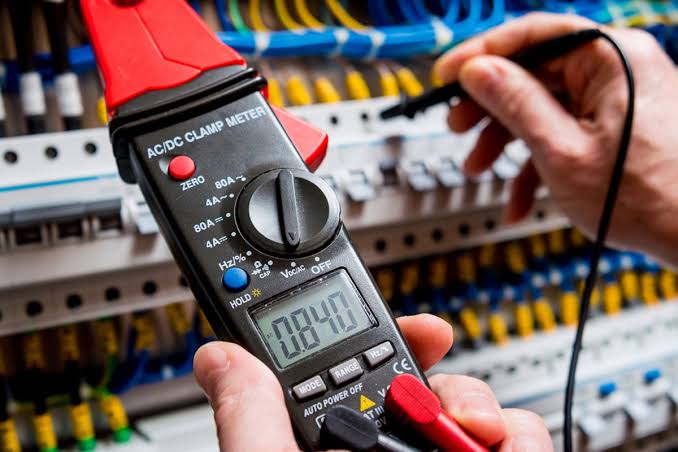
Diagnosis and Repair
A tripping breaker or a fault that only shows up sometimes is diagnosed methodically, circuit by circuit, until the actual cause is found, then you get a fixed plan to fix it, not a guess and a replaced part that might not be the problem.
Small fault-finding jobs are priced at a flat call-out rate, agreed before Adam arrives. NAPIT Approved Domestic Installer, Reg. 79130.
13 years
On the tools as an electrician
NAPIT 79130
Approved Domestic Installer
Flat rate
Call-out pricing on small jobs
£2m
Public liability insurance
The service
A breaker that trips the instant you switch something on is usually the easy case, the fault is live and repeatable. The harder cases are the ones that trip once a week, only when it rains, only when the tumble dryer and the kettle run together, or only after the house has been empty and cold overnight. These are the faults that get missed by anyone working from guesswork rather than measurement.
Proper fault finding starts with information: when it happens, what was running at the time, whether it is always the same breaker, and whether it is the main switch, an RCD, or an individual MCB that trips. From there, circuits are isolated and tested individually using insulation resistance and continuity testing to physically locate where current is leaking or where a connection is failing, rather than swapping parts until something happens to work.
Common causes range from the mundane, a damaged cable behind a picture hook, a soaked outdoor light fitting, a loose neutral in a junction box, to the more involved, such as insulation breaking down inside old cable that only fails once it warms up under load. Intermittent faults connected to damp, temperature or vibration are the ones that most reward a methodical approach, because they are precisely the ones that refuse to show up on demand.
Once the fault is located, you get a fixed plan: what the cause is, what needs doing to fix it, and a price for that repair. Small jobs are charged at a flat call-out rate agreed up front; anything larger, such as a cable needing to be re-routed or replaced, is quoted separately once the extent is known.
Whether it is the RCD, a specific MCB, or the main switch, tripping that keeps recurring has a physical cause that testing will locate.
Faults that only appear with certain weather, certain appliances, or at certain times of day are exactly what methodical circuit-by-circuit testing is built to catch.
Flickering lights, a socket that has never worked, or a previous owner's vague mention of 'the electrics playing up' are all worth diagnosing properly rather than living with.
What happens if it waits
An electrical fault that keeps tripping a breaker is not just an inconvenience, the breaker is doing its job by cutting power to something that is not behaving as it should.
Every trip is a small surge of current at the point of the fault. A loose or damaged connection that trips repeatedly tends to degrade further each time, not settle down.
Swapping a socket, an appliance or a breaker without testing often removes a symptom while leaving the actual fault, a damaged cable, a bad connection elsewhere, untouched.
A high-resistance connection generates heat at the fault, not necessarily anywhere visible. Left long enough, this is a genuine fire risk rather than a theoretical one.
Circuits that trip unpredictably can cut power to freezers or fridges without anyone noticing until the contents have spoiled.
Some households or previous occupants remove or bypass RCD protection to stop nuisance tripping. This removes the protection against electric shock that the RCD exists for, and does not fix the underlying fault.
A fault on an immersion heater circuit, an outdoor supply or a shower circuit can present as tripping elsewhere on the board, leading to time wasted chasing the wrong circuit without proper testing.
How it works
When it happens, which breaker trips, and what was running at the time is gathered up front, so the visit starts with a clear starting point rather than blind.
Small fault-finding jobs are priced at a flat call-out rate agreed before Adam arrives, so there is no surprise for the diagnostic visit itself.
Circuits are isolated in turn and tested with insulation resistance, continuity and earth fault loop measurements to locate exactly where the fault sits.
The specific cause, a damaged cable, a failed connection, a faulty appliance, damp ingress, is identified and explained in plain terms before any repair work starts.
You get a written plan for the fix and, for anything beyond the initial call-out, a price agreed before work proceeds.
What you get
Small diagnostic jobs are priced at a flat rate agreed in advance, so tracking down an intermittent fault does not turn into an open-ended hourly bill.
Testing locates the specific circuit and point of failure, so the repair addresses the fault itself rather than a symptom that will reappear.
Faults diagnosed properly the first time do not tend to resurface a month later under a different symptom.
Fixing the fault means RCD protection can stay switched in as designed, rather than being bypassed to stop nuisance tripping.
You are told what was found, why it caused the symptom you noticed, and what the fix involves, in plain English rather than jargon.
NAPIT Approved Domestic Installer registration 79130, NVQ Level 3 in Installing Electrotechnical Systems and Equipment, and a passed AM2 assessment.
In detail
The method stays the same regardless of the property, but what the fault turns out to be varies a lot across the older and newer housing stock found around Fleet and the surrounding Hampshire towns.
The first step is establishing exactly what is tripping. A single MCB tripping points to a specific circuit overload or short. An RCD or RCBO tripping points to an earth leakage fault, which could be a genuine fault on any circuit protected by that device, or a faulty appliance plugged into one of them.
Circuits are isolated one at a time and tested for insulation resistance between live conductors and earth. A circuit reading close to zero has a definite fault somewhere along its length; a circuit that reads fine in isolation but trips only when specific appliances are running usually points to the appliance itself, or to a connection that only fails under load and heat.
Faults that appear only in wet weather are frequently outdoor lighting, garden power circuits, or cable runs passing through external walls where water has found a way in over time. These often test fine on a dry day and only show reduced insulation resistance once damp has had a chance to sit.
Faults that appear only once a circuit has warmed up under load, after the heating has been running for an hour, for example, often point to a loose connection expanding slightly with heat until it fails, then contracting and reconnecting once things cool down. This is one of the more time-consuming faults to trace precisely because it will not always reproduce on demand.
Rubber and lead-sheathed cable, still present in some pre-1970s properties, degrades from the inside and often shows up as insulation resistance failures under fault-finding testing well before any visible external damage.
Historic DIY additions, a spurred socket wired into a lighting circuit, a shed supply run in twin and earth not rated for outdoor burial, are a recurring source of both nuisance tripping and genuine safety concerns once traced.
Occasionally the fault-finding visit reveals that the real fix is larger than a single repair, a consumer unit that cannot support additional protection, or cable in poor enough condition that a partial rewire is the sound long-term answer rather than a repeated patch.
In that case you are told plainly, given the reasoning behind it, and quoted separately for the larger piece of work, such as a consumer unit replacement from £650 for a 6-way board. There is no obligation to proceed with anything beyond the original diagnostic call-out.
Not sure which one you need? Start on the homepage or send the details for a free quote.
Common questions
Small fault-finding jobs are priced at a flat call-out rate, agreed with you before the visit. If the fault turns out to need larger work, that is quoted separately once the cause is known.
Straightforward faults, such as a single circuit tripping repeatably, are often traced within an hour or two. Intermittent faults that do not reproduce on demand can take longer, and may occasionally need a follow-up visit if the symptom only shows under specific conditions.
Many faults, once located, are fixed on the same visit, a damaged cable section, a failed connection, a faulty accessory. Larger repairs, such as cable replacement over a long run, are scheduled once quoted.
No. Circuits are isolated and tested with proper instruments to find the specific cause before anything is replaced, so the repair addresses the actual fault rather than a guess.
Minor repairs are recorded appropriately for the work carried out. Where the repair amounts to new circuit work, a Minor Electrical Installation Works Certificate or full EIC is issued as appropriate.
An RCD trips on earth leakage, which is often intermittent and appliance-related rather than a permanent, visible fault. Testing each circuit and, where needed, each appliance individually is how the specific cause is isolated.
Emergency call-outs are available on weekdays and some Saturdays, though not Sundays. The phone is answered every day, so call and the earliest realistic slot will be confirmed.
Yes. Jackson's Electrical Contractors is a NAPIT Approved Domestic Installer, registration 79130, with NVQ Level 3 in Installing Electrotechnical Systems and Equipment, a passed AM2 assessment, £2 million public liability and £250,000 professional indemnity cover.
Bank transfer is preferred. A deposit is only required on larger jobs such as rewires and new installations, not on a standard fault-finding call-out.
Yes, including Farnborough, Aldershot, Guildford, Farnham, Camberley, Ascot, Yateley and Sandhurst. Call to check anywhere just outside that area.
Free, no-obligation quote
Describe what is happening and when, and you will get a flat call-out price agreed up front, methodical testing to find the actual cause, and a clear plan to fix it.